
If you have a Flexible Spending Account, there is a deadline attached to it and most people discover this in the third week of December. Dental care is an eligible expense, which makes it one of the more practical places to put money that would otherwise be forfeited.
Quick Facts
What Is the Difference Between an FSA and an HSA?
Both accounts let you pay for healthcare with pre-tax dollars, which is the point of them. Where they differ is what happens to money you do not spend.
An FSA is funded through your employer and is typically use-it-or-lose-it. Money left at the deadline generally goes back to the employer rather than to you.
An HSA is paired with a high-deductible health plan and the balance is yours permanently. It carries over year after year and moves with you if you change jobs.
So the urgency is entirely on the FSA side. HSA holders have no deadline, though many prefer to use funds on treatment they have been postponing rather than leave them idle.
Keep the paperwork
FSA and HSA claims sometimes require an itemized receipt or, for certain items, documentation that the treatment was recommended for a medical reason rather than a cosmetic one. Ask our front desk for whatever documentation you need at the time of your visit rather than trying to reconstruct it in January.
What Dental Treatment Qualifies for FSA or HSA?
Most of what happens in a dental office is an eligible expense for both accounts. Broadly:
- Examinations, x-rays, and cleanings
- Fillings, crowns, and bridges
- Root canal treatment and extractions
- Periodontal treatment
- Dentures and dental implants
- Orthodontic treatment, including clear aligners
- Night guards prescribed for grinding
The usual exclusion is treatment that is purely cosmetic. Whitening is the standard example and is generally not eligible.
Some procedures sit in between depending on why they are being done, and rules vary between plan administrators. If you are unsure about a specific item, check with your plan administrator rather than assuming.
How Do FSA and HSA Work Alongside Insurance?
These are not alternatives to each other. They stack.
Dental insurance pays its share up to your annual maximum. FSA and HSA funds can then cover your remaining portion, including the deductible and any amount beyond what the plan will pay.
This matters most for larger treatment, where the annual maximum runs out partway through and the balance is yours. Pre-tax dollars covering that balance is meaningfully better than after-tax dollars.
It also means the end of the year can involve two separate deadlines running at once: your dental benefits resetting, and your FSA expiring. They are worth planning together rather than separately.
Do FSA Funds Roll Over?
FSA rules are not uniform. Employers choose between options, so yours may differ from a colleague’s at another company.
Some plans allow a limited amount to carry into the following year. Some offer a grace period of a few months into the new year to spend the prior year’s balance. Some offer neither and the deadline is firm at December 31.
Find out which of these applies to you before assuming you have more time or less time than you do. Your HR department or plan administrator can tell you, and the answer changes how much urgency this deserves.
Can You Enroll in an FSA Mid-Year?
Worth clearing up, because it costs people money every year.
FSA contribution amounts are chosen during open enrollment, before the year begins, and generally cannot be changed mid-year outside of qualifying life events. People tend to underestimate, having no dental treatment in mind at the time, and then face a large expense with an empty account.
If you know you have treatment coming, whether that is orthodontics for a child, implant work, or a treatment plan your dentist has already laid out, that is information worth having in front of you when you choose next year’s contribution.
Ask us for a written treatment plan with estimated costs before your open enrollment window closes. Our front desk produces these routinely, and it turns the contribution decision into an informed one rather than a guess.
Can You Use FSA or HSA for Orthodontics?
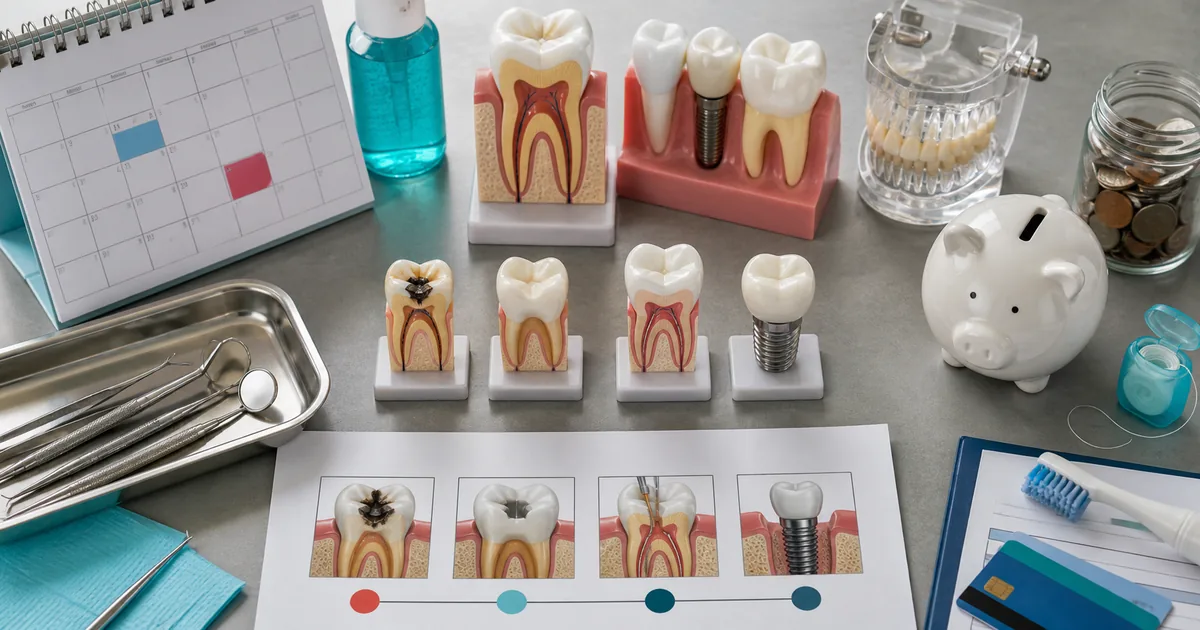
Orthodontic treatment is eligible for both FSA and HSA funds, and because it typically spans more than one year it interacts with these accounts differently from a single procedure.
How a plan administrator treats orthodontic expenses spread across plan years is not uniform. Some allow the full amount to be claimed when treatment begins. Others require claims to track actual payments as they are made.
If you are considering treatment for yourself or a child, our posts on Invisalign for teens and clear aligners for adults cover the treatment side. For the account side, confirm the handling with your plan administrator rather than assuming.
When Should You Book to Use Funds by December 31?
The constraint is not usually the money. It is the appointment.
December is the busiest stretch of the dental year, for exactly the reasons this article describes, and it collides with school holidays and travel. Treatment that requires more than one visit needs lead time that mid-December does not offer.
If you know you have FSA funds to use and treatment that has been waiting, November is the month to act. Call and we will look at your remaining insurance benefits and your treatment plan together, and tell you what is realistically achievable before the deadline.
Our insurance and financing page covers how we handle coverage, and financing options including CareCredit are available for anything that extends beyond what your accounts and benefits cover.
Where Is Mountainside Dental Located?
La Quinta
78461 CA-111
Serving La Quinta, Indian Wells, Palm Desert and Indio
Rancho Mirage
42500 Bob Hope Dr STE 1
Serving Rancho Mirage, Cathedral City and Palm Springs
Yucaipa
11834 Bryant St., Ste. #104
Serving Yucaipa, Calimesa, Redlands and Cherry Valley
Rancho Santa Margarita
29941 Aventura, Suite B
Serving RSM, Mission Viejo, Coto de Caza and Ladera Ranch
Lake Forest
23731 El Toro Rd. Unit D
Serving Lake Forest, Baker Ranch, Foothill Ranch and Portola Hills
Frequently Asked Questions
Put those funds to use
Call the Mountainside Dental office nearest you and we will review your benefits, your FSA timing, and any treatment that has been waiting.
Book an Appointment


