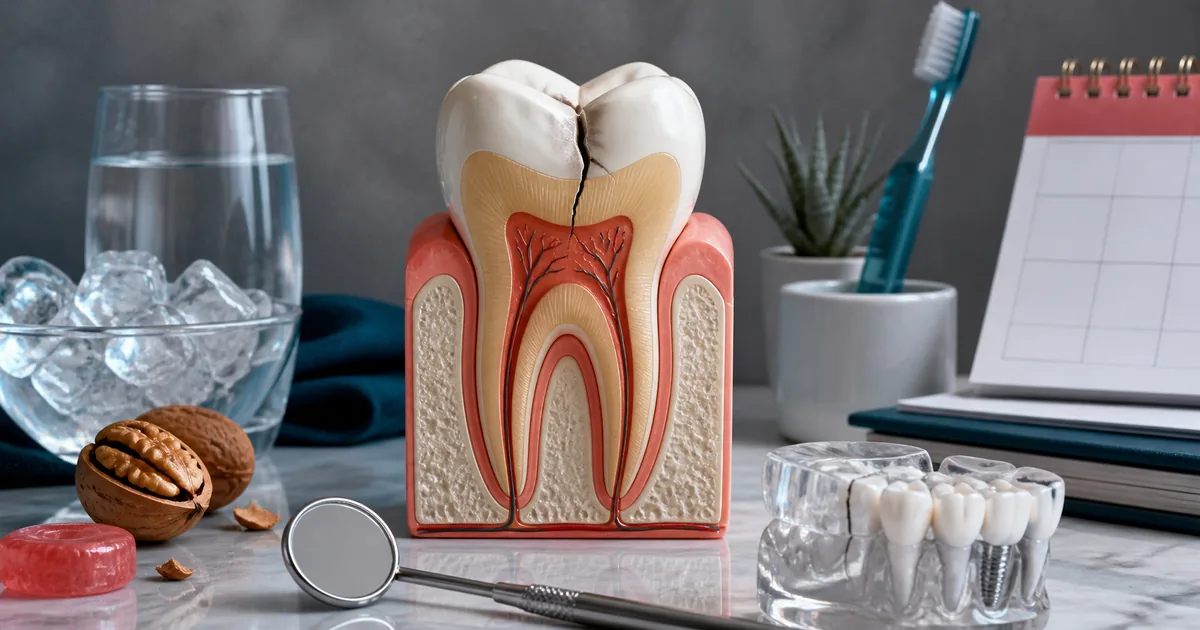
Bone heals. Skin heals. A cracked tooth does not, and that single fact drives most of what a dentist will tell you about one. Enamel has no blood supply and no mechanism for repairing itself, so a crack that exists today will still be there in six months, usually slightly larger.
Quick Facts
Why Are Cracked Teeth Hard to Diagnose?
Patients with cracked teeth often describe a frustrating history. It hurts sometimes. It does not hurt other times. They have mentioned it before and nothing was found.
There are real reasons for that. A crack running vertically through a tooth is often invisible on an x-ray, because the x-ray beam passes along the plane of the crack rather than across it. The tooth can look entirely normal in the image.
The pain is intermittent because it depends on the crack being flexed in a particular direction. Chew at one angle and the segments move against each other. Chew at another and nothing happens.
This is why describing the pattern carefully to your dentist is genuinely useful diagnostic information.
What Are the Symptoms of a Cracked Tooth?
Pain on release rather than on pressure. This is the most characteristic sign. Biting down wedges the crack open, and releasing lets the segments snap back together, which is the moment the jolt arrives. Sensitivity to cold or sweetness in one specific spot. The crack lets stimuli reach dentin they should not reach. Pain that comes and goes with no clear trigger. Depends on chewing angle and what you happened to eat. A rough edge your tongue keeps finding. Sometimes the only sign. Nothing at all. Plenty of cracks are found at a routine exam before they have caused symptoms, which is the best case.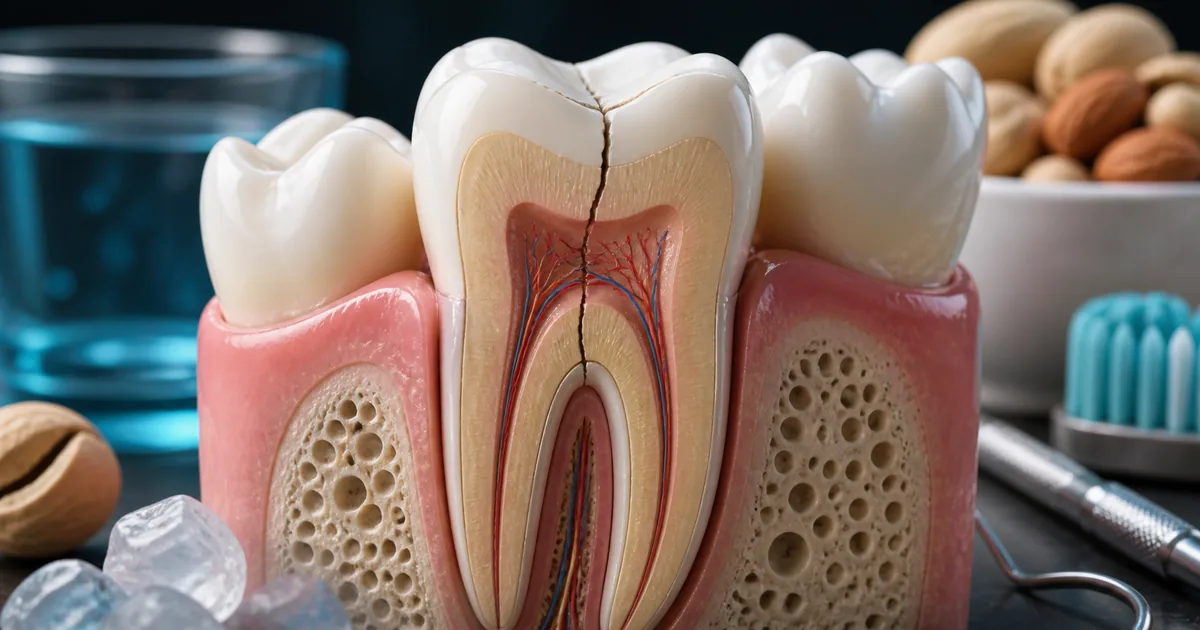
Why Does Waiting Make a Cracked Tooth Worse?
A crack is a stress concentrator. Force applied to a tooth that is already cracked does not distribute evenly. It focuses at the tip of the crack and drives it further.
You chew thousands of times a day. Each one works the crack incrementally deeper.
The consequence is that the treatment options available depend on where the crack has reached. A crack confined to the enamel and outer dentin is a very different situation from one that has reached the pulp, and different again from one that has extended below the gumline into the root.
This is the practical argument for not waiting. The tooth does not get better, and the range of things that can be done to save it narrows.
Cracks below the gumline are a different conversation
When a crack extends vertically down into the root, the outlook changes considerably, and in some cases the tooth cannot be kept. This is not meant to alarm anyone, but it is the reason dentists press on this rather than suggesting you monitor it. A crack caught in the crown of the tooth generally has more options available than the same crack six months later.
What Causes Teeth to Crack?
Biting something hard. Ice, popcorn kernels, olive pits, hard candy, and the occasional unexpected object in food. Grinding and clenching. Sustained force, often at night, applied to teeth over long periods. Our post on night guards covers how this gets managed. Large old fillings. A tooth that is mostly filling has less of its own structure holding it together. Big amalgam fillings placed decades ago are a common site. Temperature extremes. Hot coffee immediately followed by ice water makes enamel expand and contract. Previous trauma. A knock years ago that seemed to cause no damage at the time.What Happens at a Cracked Tooth Appointment?
Diagnosis usually involves more than looking. Your dentist may use a bite stick to load individual cusps one at a time and find which one reproduces the pain, apply a dye that seeps into the crack and makes it visible, use magnification and transillumination, and check the tooth’s response to cold.
X-rays are still taken, mainly to check the surrounding bone and rule out other causes, even though the crack itself often will not appear.
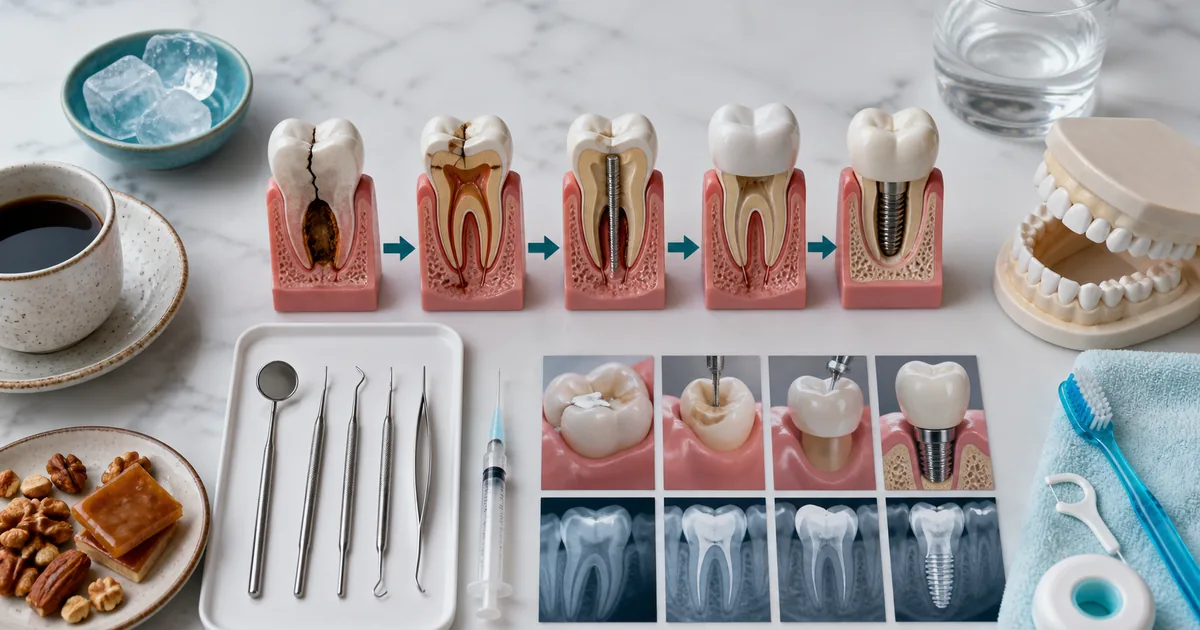
What is recommended afterward depends entirely on what is found. A crown comes up frequently because it holds the tooth together and stops the segments flexing, but whether that is the right answer for your tooth is a conversation with your dentist. In some cases root canal treatment is part of the plan, and occasionally a tooth cannot be saved.
What If a Tooth Cracks Suddenly?
If a piece of tooth breaks off, rinse with warm water, keep any fragments you can find, and avoid chewing on that side.
Call us rather than waiting for a routine appointment. We keep time in the daily schedule for urgent problems, and a broken tooth with an exposed surface is one of them.
Our dental emergency guide covers what to do in the meantime for a range of situations.
Where Is Mountainside Dental Located?
La Quinta
78461 CA-111
Serving La Quinta, Indian Wells, Palm Desert and Indio
Rancho Mirage
42500 Bob Hope Dr STE 1
Serving Rancho Mirage, Cathedral City and Palm Springs
Yucaipa
11834 Bryant St., Ste. #104
Serving Yucaipa, Calimesa, Redlands and Cherry Valley
Rancho Santa Margarita
29941 Aventura, Suite B
Serving RSM, Mission Viejo, Coto de Caza and Ladera Ranch
Lake Forest
23731 El Toro Rd. Unit D
Serving Lake Forest, Baker Ranch, Foothill Ranch and Portola Hills
Frequently Asked Questions
Get that tooth looked at
If biting on one tooth feels wrong, book an exam at the Mountainside Dental office nearest you.
Book an Appointment