Whitening requests climb every November for obvious reasons. The two things worth knowing before you book are that not all discoloration responds to whitening, and that existing dental work will not change color at all. Both affect whether you will be happy with the result.
Quick Facts
What Are the Two Kinds of Tooth Discoloration?
This distinction determines whether whitening will do what you are hoping.
Extrinsic staining sits on the outside of the enamel. It comes from coffee, tea, red wine, dark sauces, and tobacco, accumulating gradually on the surface. This is the type that responds most predictably. Intrinsic discoloration comes from within the tooth. Enamel thins over the years and the dentin beneath it, which is naturally more yellow, shows through more strongly. Trauma to a tooth can darken it from the inside, and certain medications taken during tooth development produce discoloration built into the tooth structure.Most people have some of both. How much of each you have affects what result is realistic, and that is an assessment your dentist makes by looking rather than something you can determine from a photograph.
Do Crowns and Fillings Whiten?
This surprises people regularly and it is worth understanding before rather than after.
Whitening works on natural tooth structure. Porcelain, composite, and other restorative materials do not respond to it at all. They keep whatever shade they were made in.
Your crowns and tooth-colored fillings were matched to your natural teeth as they looked on the day they were placed. Lighten the teeth around them and the restorations stay put, which can leave them looking noticeably darker by comparison.
If you have dental work in your smile line, the sequence matters. Whitening first and then matching any new restorations to the lighter shade is usually the order that makes sense, though whether replacing existing work is appropriate is entirely a conversation for your dentist. Our post on bonding compared with veneers covers some of the options here.
Get the examination first
Whitening is not appropriate over untreated decay or active gum disease, and a whitening product applied to a tooth with an existing problem can make discomfort considerably worse. This is the main practical reason to start with an examination rather than a product, whatever you eventually decide to use.
How Is Professional Whitening Different From Strips?
The meaningful difference is not only the product. It is that someone examines your mouth first.
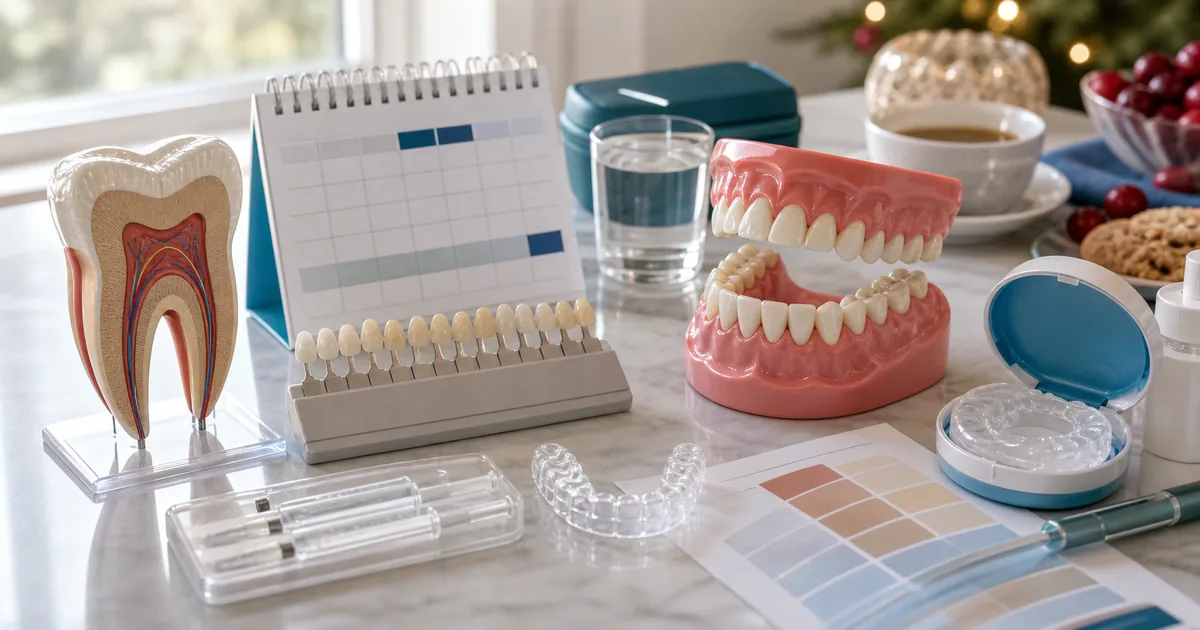
Before whitening, a dentist checks for decay, assesses gum health, looks at existing restorations, and identifies the type of discoloration present. Whitening over untreated decay or inflamed gums is not appropriate, and a drugstore kit cannot make that determination.
Custom trays also matter. A tray made to fit your teeth keeps the material where it is meant to be, which is both more effective and less irritating to gums than a one-size strip.
Our post on in-office whitening compared with take-home trays goes through how the two approaches differ, and what actually works covers the wider claims made about whitening products.
Does Whitening Cause Sensitivity?
Sensitivity during and shortly after whitening is common and usually temporary. It tends to present as short sharp reactions to cold rather than a constant ache.
Tell your dentist if it happens. There are adjustments that can be made, and continuing regardless when you are uncomfortable is not the intention.
If your teeth are already sensitive before you start, raise that first. It may change the approach, and your dentist will want to understand why they are sensitive before adding anything on top of it.
How Long Before the Holidays Should You Whiten?
The practical advice is to leave more room than you think you need.
Whitening approaches vary in how they are delivered, and some involve a series of applications over a period rather than a single session. If there is preparatory work needed first, such as a cleaning or treatment of a cavity found at the examination, that adds time as well.
Booking in the week before an event leaves no margin for any of that. November is comfortable. Mid-December is not.
There is a scheduling argument too. December is the busiest stretch of the year in dental offices, with year-end benefits driving demand, so the appointments that remain are the ones nobody else wanted.
How Long Do Whitening Results Last?
Whitening is not permanent, and how long it lasts depends heavily on what you consume and whether you smoke.
The habits that stained teeth originally will stain them again. Rinsing with water after coffee, tea, or red wine is a small thing that genuinely helps. Using a straw for iced coffee reduces contact with the front teeth.
Your dentist can advise on maintenance appropriate to your situation. If you have take-home trays, they generally remain usable for touch-ups, which is worth asking about.
For cost and coverage questions, whitening is generally considered cosmetic and treated differently from restorative work by most plans. See our insurance and financing page, and financing options including CareCredit if you would rather spread payment out.
Where Is Mountainside Dental Located?
La Quinta
78461 CA-111
Serving La Quinta, Indian Wells, Palm Desert and Indio
Rancho Mirage
42500 Bob Hope Dr STE 1
Serving Rancho Mirage, Cathedral City and Palm Springs
Yucaipa
11834 Bryant St., Ste. #104
Serving Yucaipa, Calimesa, Redlands and Cherry Valley
Rancho Santa Margarita
29941 Aventura, Suite B
Serving RSM, Mission Viejo, Coto de Caza and Ladera Ranch
Lake Forest
23731 El Toro Rd. Unit D
Serving Lake Forest, Baker Ranch, Foothill Ranch and Portola Hills
Frequently Asked Questions
Book before December fills up
Schedule a whitening consultation at the Mountainside Dental office nearest you and find out what is realistic for your teeth.
Book an Appointment