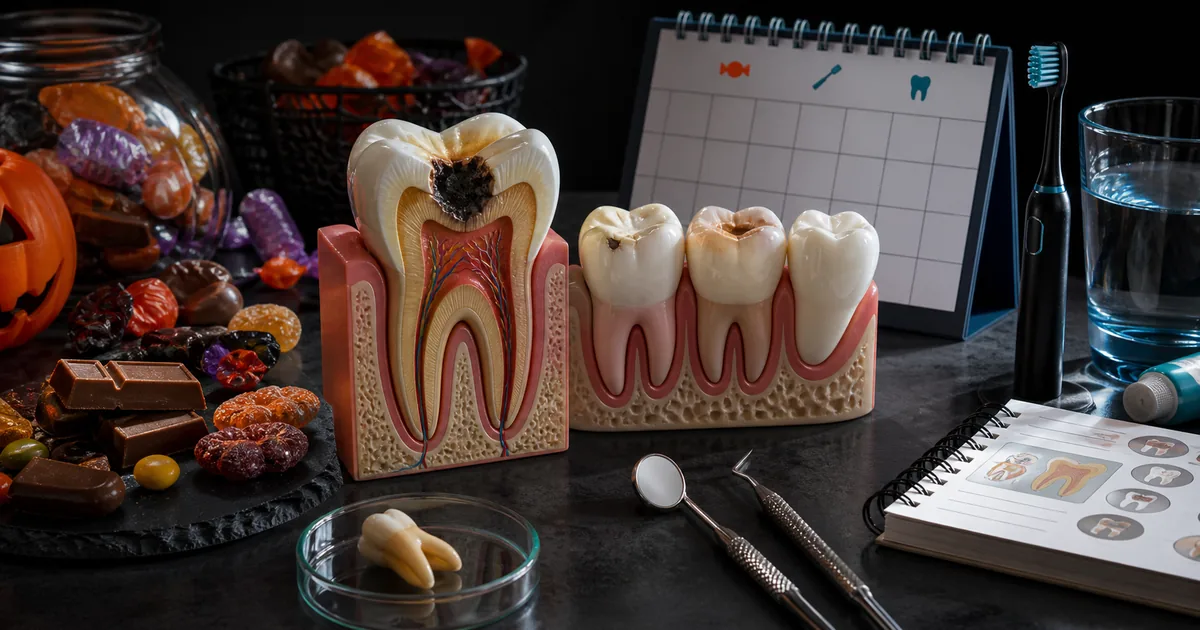
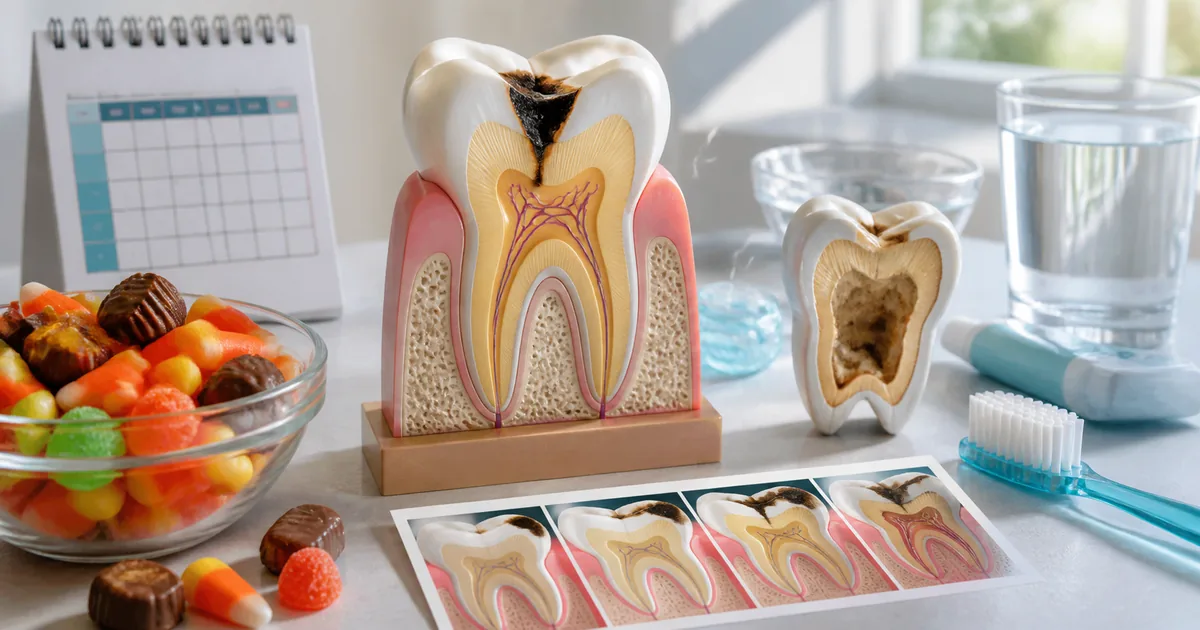
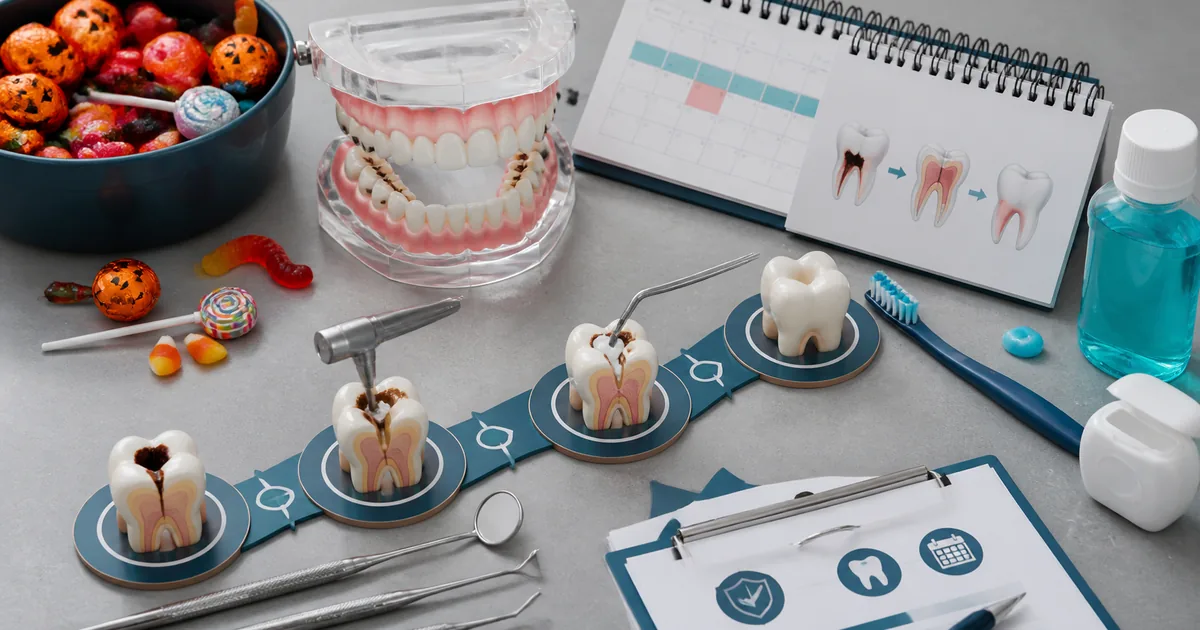
Every October, parents get told to limit the candy. It is advice that ignores how Halloween actually works in a house with children. The more useful version is that the type of candy and the timing of it matter considerably more than the total amount.
Quick Facts
The bigger factor
How long sugar stays on teeth, not how much is eaten
Hardest on teeth
Sticky and chewy candy that packs into molar grooves
Easiest on teeth
Chocolate, which melts and clears quickly
Best timing
With a meal rather than grazed across the afternoon
Non-negotiable
Brushing before bed
Worth booking
A checkup, if your child is due for one
Why Does Candy Timing Matter More Than Quantity?
After sugar enters the mouth, the bacteria in plaque produce acid, and that acid works on enamel until saliva gradually neutralizes it and rebalances things.
That recovery process takes time. A child who eats ten pieces of candy in one sitting triggers the process once. A child who eats one piece every twenty minutes across an afternoon restarts it repeatedly, and the mouth never gets back to baseline.
Same total candy. Very different exposure.
Which is why the practical advice is not to confiscate the bucket. It is to keep candy attached to mealtimes rather than letting it become an all-day activity.
Which Halloween Candy Is Hardest on Teeth?
Sorted by how much trouble they tend to cause, easiest first.
Chocolate. Melts at body temperature and clears the mouth quickly. The easiest of the lot.
Anything chewed and swallowed fast. Brief contact time, minimal residue.
Sour candy. Acidic as well as sugary, so it works on enamel directly rather than only feeding bacteria. Water afterward helps.
Lollipops and hard candy. The problem here is duration. A candy designed to last fifteen minutes keeps sugar against enamel for fifteen minutes.
Taffy, caramel, and gummies. These press into the pits and grooves of back teeth and genuinely resist brushing. If your child is going to eat one category with real attention paid afterward, this is it.
A cracked tooth in early November is common
The week after Halloween reliably brings cracked teeth, usually from biting hard candy. If your child bites down on something and then complains that one tooth hurts when chewing, do not wait to see whether it settles. Call us and describe what happened.
What Should You Do With the Candy Bucket?
A few approaches that families actually stick to.
Pick a candy time. Dessert after dinner, and the bucket lives in a cupboard the rest of the day. This does more than any restriction on quantity.
Let them choose favorites and move the rest along. Plenty of families buy back the excess or donate it. Kids tend to be fine with this if they keep the ones they care about.
Water with candy. Simple and it genuinely helps clear residue.
Brush before bed, without exception. Candy sitting on teeth overnight, when saliva flow is at its lowest, is the worst version of this.
Where Do Cavities Actually Form?
In children, the back molars do most of the trouble. Their chewing surfaces are covered in deep pits and fissures that a toothbrush bristle cannot properly reach into, and sticky candy settles there.
This is the reasoning behind dental sealants, which cover those grooves with a thin protective coating. Whether they are appropriate for your child is something your dentist will assess.
The other common spot is between teeth, where floss is the only thing that reaches. If your child’s teeth touch each other, brushing alone leaves those surfaces uncleaned.
What Can Kids With Braces Eat at Halloween?
For children in braces, the sticky and hard categories are a genuine problem rather than a general caution. Caramel and taffy pull at brackets, and biting into hard candy can break them.
Clear aligners are a different situation. They come out to eat, which removes the bracket risk, though anything sugary still needs a brush before the trays go back in. Our post on Invisalign for teens covers how that works day to day.
Your orthodontist will have specific guidance for your child’s appliance.
When Should Kids Have a Checkup?
October is a reasonable time to get children seen, before the December rush and while the school schedule is still predictable.
If your family does not have dental insurance, our membership plan covers preventive care for children. See the insurance and financing page for how coverage works here.
Our post on first dental visits is worth reading if this will be your child’s first appointment.
Where Is Mountainside Dental Located?
La Quinta
78461 CA-111 Serving La Quinta, Indian Wells, Palm Desert and Indio
Rancho Mirage
42500 Bob Hope Dr STE 1 Serving Rancho Mirage, Cathedral City and Palm Springs
Yucaipa
11834 Bryant St., Ste. #104 Serving Yucaipa, Calimesa, Redlands and Cherry Valley
Rancho Santa Margarita
29941 Aventura, Suite B Serving RSM, Mission Viejo, Coto de Caza and Ladera Ranch
Lake Forest
23731 El Toro Rd. Unit D Serving Lake Forest, Baker Ranch, Foothill Ranch and Portola Hills
Frequently Asked Questions
Should I just take the candy away?
Most families find that unrealistic, and it is not necessary. Controlling when candy is eaten does more good than controlling how much.
Is chocolate really better for teeth?
It clears the mouth faster than sticky or hard candy, which means less contact time with enamel. It still contains sugar, so it is a comparison rather than an endorsement.
What about sugar-free candy?
It avoids feeding the bacteria that produce acid, though many sugar-free sour candies are still acidic. Read what it is rather than assuming sugar-free means harmless.
Do my child’s baby teeth matter if they will fall out?
Yes. Baby teeth hold space for the permanent teeth behind them and decay in them can be painful and can affect what comes next. They are worth looking after.
How soon after eating candy should they brush?
Brushing before bed is the important one. After sour or acidic candy, rinsing with water and waiting a while before brushing is gentler on enamel that has been temporarily softened.
My child will not floss. What should I do?
Floss picks are easier for small hands than string and many children accept them more readily. Ask our hygienist to show your child a technique at their next visit.
Are sealants right for my child?
That depends on their teeth, their cavity history, and the shape of their molars. Your dentist will assess it at a visit rather than by rule.
How often should my child see a dentist?
That varies by child and is something your dentist will recommend based on their individual risk. Ask at your next appointment.
Book your child’s checkup
October appointments are easier to get than December ones. Find the Mountainside Dental office nearest you.
Mountainside Dental in Yucaipa provides children’s dental care for families across Yucaipa, Calimesa, Redlands, Oak Glen, Cherry Valley, and Beaumont. Our Bryant Street office has offered pediatric dental services since 2015, treating children from their first tooth through adolescence.
When Should My Child First Visit the Dentist?
The American Dental Association recommends scheduling a child’s first dental visit by age one or within six months of the first tooth appearing. Early visits establish a baseline for your child’s oral health and allow the dentist to identify potential concerns before they progress.
A child’s first dental visit at Mountainside Dental Yucaipa is a gentle introduction to the dental office. The dentist examines your child’s teeth, gums, and jaw development. We also review feeding habits, pacifier use, and age-appropriate oral hygiene practices with parents.
The ADA recommends a child’s first dental visit by age one. Starting dental visits early helps children become comfortable with the dental environment and builds habits that last into adulthood. Children who visit the dentist regularly by age two have lower rates of cavities and dental anxiety later in life.
Children’s Dental Services at Mountainside Dental Yucaipa
Our Yucaipa office offers a full range of pediatric dental services designed for patients from infancy through their teen years. Each service addresses a specific stage of your child’s oral development.
Pediatric Exams
Comprehensive dental exams tailored to each age group, tracking tooth eruption, jaw growth, and bite development at every visit.
Cleanings
Professional cleanings remove plaque and tartar from primary and permanent teeth. Our hygienists teach children proper brushing and flossing technique.
Thin protective coatings applied to the chewing surfaces of molars. Sealants reduce cavity risk by up to 80% in treated teeth.
Pediatric Fillings
Tooth-colored composite fillings to treat cavities in baby teeth and permanent teeth, preserving natural tooth structure.
Space Maintainers
Custom appliances that hold space for permanent teeth after early loss of a baby tooth, preventing crowding and alignment problems.
We also provide habit counseling for thumb sucking and tongue thrust. These habits, if prolonged past age four, can affect jaw development and tooth alignment. Early intervention helps redirect growth patterns before orthodontic treatment becomes necessary.
P
reventing Cavities in Children
Tooth decay is the most common chronic childhood disease in the United States, affecting more than half of children by age eight. Prevention starts at home and continues with regular dental visits. Mountainside Dental Yucaipa focuses on cavity prevention as the foundation of pediatric dental care.
5 Steps to Prevent Cavities in Your Child
1
Brush Twice Daily
Use a soft-bristled, age-appropriate toothbrush with fluoride toothpaste. Children under three need a rice-grain-sized amount. Children three and older use a pea-sized amount.
2
Start Flossing Early
Begin flossing as soon as two teeth touch. Parents should assist with flossing until the child can do it independently, usually around age seven or eight.
3
Limit Sugary Snacks and Drinks
Frequent exposure to sugar feeds cavity-causing bacteria. Offer water instead of juice between meals, and save sweets for mealtimes when saliva production is highest.
4
Get Professional Fluoride Treatments
In-office fluoride applications strengthen enamel beyond what toothpaste alone provides. We recommend fluoride treatments every six months for children at moderate to high cavity risk.
5
Apply Dental Sealants
Dental sealants on permanent molars reduce decay risk by up to 80% for the first two years and continue protecting for up to nine years after application.
Did You Know?
Dental sealants reduce cavities in school-age children by up to 80%. The CDC reports that children without sealants have almost three times more cavities than children with sealants. Ask about sealants for your child at their next visit.
Making Dental Visits Comfortable for Kids
Mountainside Dental Yucaipa creates a welcoming environment for young patients. Our team uses age-appropriate language to explain procedures, and we pace each visit to match your child’s comfort level. Building trust early leads to a lifetime of positive dental experiences.
We encourage parents to stay with their child during the appointment. Parent presence helps younger children feel secure and allows you to hear the dentist’s findings and recommendations firsthand. For older children who prefer independence, parents can wait in our reception area.
Our team uses positive reinforcement throughout each visit. Children receive praise for cooperation and small rewards after their appointment. We avoid words that might cause unnecessary fear and instead focus on what the child will see, hear, and feel during each step.
“My daughter and I love this dental office. They are very considerate and professional, and they always make my daughter and I feel welcome and comfortable. Wonderful work and service all the way around!”
Joseph R., Yucaipa, Google Review
Common Pediatric Dental Concerns
Parents often have questions about habits and developmental milestones that affect their child’s teeth. Mountainside Dental Yucaipa addresses these concerns during routine visits and provides guidance tailored to your child’s age and development.
Thumb Sucking
Thumb sucking is normal in infants and toddlers. Most children stop on their own between ages two and four. If the habit continues past age four, it can push front teeth forward and alter the shape of the palate. Our dentists offer strategies and, if needed, appliances to help your child stop.
Baby Bottle Tooth Decay
Baby bottle tooth decay occurs when a child’s teeth are exposed to sugary liquids for extended periods. This often happens when children fall asleep with a bottle containing milk, formula, or juice. The upper front teeth are most affected. Switching to water at bedtime and wiping gums after feeding helps prevent this condition.
Tongue Thrust
Tongue thrust is a swallowing pattern where the tongue pushes forward against the front teeth. Over time, this pressure can create an open bite or push teeth out of alignment. If identified early, habit retraining exercises can correct the pattern before it affects permanent teeth.
Early Orthodontic Evaluation
The American Association of Orthodontists recommends a first orthodontic evaluation by age seven. At this age, the mix of baby teeth and permanent teeth allows the dentist to identify crowding, crossbites, and jaw growth issues. Early detection does not always mean early treatment, but it allows your dentist to monitor development and intervene at the right time. Mountainside Dental offers Invisalign and other orthodontic options for older children and teens.
Serving Yucaipa Families
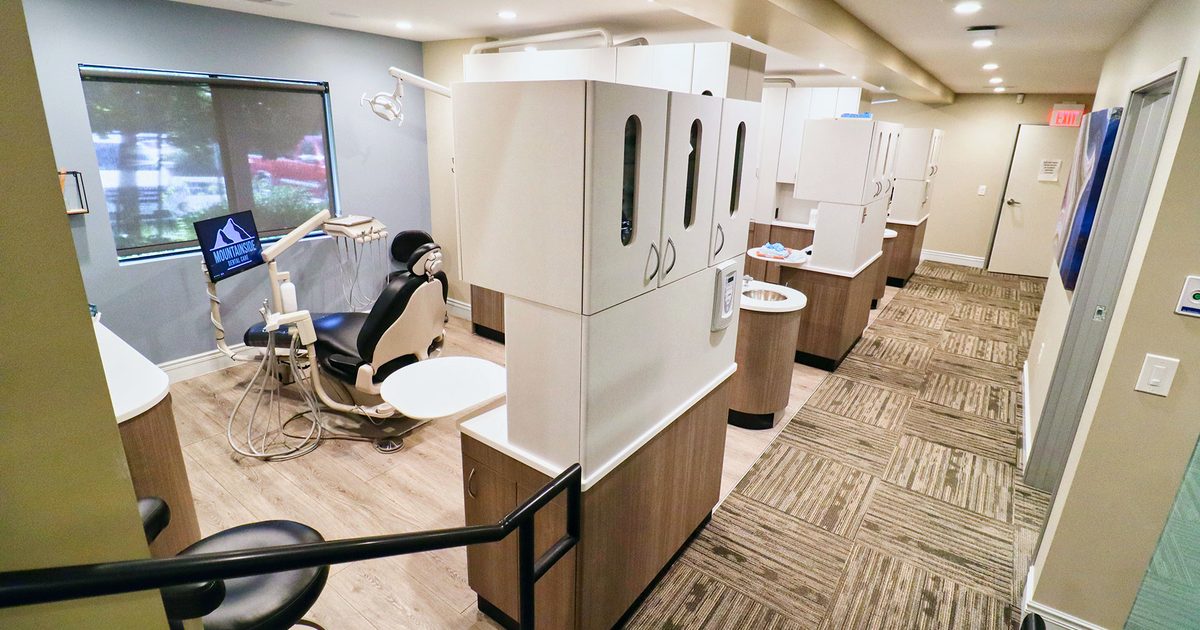
Our Yucaipa dental office is located at 11834 Bryant St., Ste. #104, Yucaipa, CA 92399. We are open Monday through Thursday from 8am to 5pm and Friday from 8am to 2pm. For more about our full range of services, visit our Yucaipa dental care guide.
Yucaipa Calimesa Redlands Oak Glen Cherry Valley Beaumont
Frequently Asked Questions About Pediatric Dentistry in Yucaipa
At what age should I take my child to the dentist in Yucaipa?
The American Dental Association recommends a child’s first dental visit by age one or within six months of the first tooth erupting. Mountainside Dental Yucaipa welcomes infants for their first visit. Early exams allow us to monitor tooth development, provide fluoride protection, and establish a comfortable routine before any treatment is needed.
How do dental sealants protect my child’s teeth?
Dental sealants are thin, protective coatings painted onto the chewing surfaces of back molars. They seal the grooves and pits where food particles and bacteria collect. Sealants reduce cavity risk by up to 80% in treated teeth. The application takes a few minutes per tooth and is painless. Sealants can last up to nine years with proper care.
Is fluoride safe for children?
Yes. Fluoride is safe and effective for children when used in the recommended amounts. The ADA, CDC, and World Health Organization all endorse fluoride for cavity prevention. Children under three should use a rice-grain-sized amount of fluoride toothpaste. Children three to six should use a pea-sized amount. Professional fluoride treatments at our office provide additional enamel protection.
What should I do if my child has a dental emergency?
Call Mountainside Dental Yucaipa right away. For a knocked-out permanent tooth, hold it by the crown (not the root), rinse gently, and try to place it back in the socket. If that is not possible, keep the tooth in milk and get to our office within 30 minutes. For a toothache, rinse with warm water and apply a cold compress to reduce swelling.
When should my child start orthodontic evaluation?
The American Association of Orthodontists recommends a first orthodontic evaluation by age seven. At this age, enough permanent teeth have emerged for your dentist to spot crowding, spacing, crossbites, and jaw growth concerns. Early evaluation does not always lead to immediate treatment, but it helps us plan the right timing for intervention if needed.
How can I help my child overcome fear of the dentist?
Start dental visits early so the experience becomes routine. Use positive language about the dentist at home and avoid sharing your own dental anxieties. Read children’s books about dental visits. At Mountainside Dental Yucaipa, we use age-appropriate explanations, let children explore dental tools, and provide positive reinforcement throughout each appointment.
Does Mountainside Dental Yucaipa accept Medi-Cal for children?
Yes. Mountainside Dental Yucaipa accepts Medi-Cal (Denti-Cal) for children’s dental services including exams, cleanings, X-rays, fluoride treatments, sealants, and fillings. Our front office team verifies your child’s eligibility and explains covered services before the appointment. We also accept most PPO and HMO dental insurance plans.
Schedule Your Child’s Dental Visit in Yucaipa
New and returning patients welcome. Book your child’s exam, cleaning, or consultation online today.
Trusted pediatric dental care in Yucaipa since 2015. Serving families in Yucaipa, Calimesa, Redlands, Oak Glen, Cherry Valley, and Beaumont. ADA, CDA, and AGD member practice.
We'd like to use Microsoft Clarity to see how visitors use our site (it records clicks, scrolling and pages viewed, and is off on our appointment request pages), Simplifeye for live chat (the chat tool also runs Google Analytics), YouTube for our office videos and Google Maps for our office maps. These share data with Microsoft, Simplifeye and Google. None of them load unless you accept.